Faecal Water In Horses: Why Normal Droppings Can Still Mean A Wet Tail
Last Updated 4th September, 2026
1. This Is Not Diarrhoea, And That Is The Whole Point
The thing that confuses most owners is that the droppings look fine. Faecal water syndrome is not loose manure. It is water passed separately, alongside droppings that are formed and normal.
That distinction matters, because owners spend weeks looking for a digestive illness that is not there. Unlike diarrhoea, faecal water does not necessarily point to a deeper health problem. It points to a hindgut that is not quite settled.
2. The Mess Is The Symptom, Not The Problem
Wet hindquarters, a tail that needs washing again, and skin that never gets a chance to dry out. In winter that constant moisture keeps the skin cold and sore. In summer it draws flies.
So the bucket and sponge come out again. But washing treats the outside of a problem that starts in the hindgut, which is why the cycle never really ends no matter how clean you keep him.
3. Why It Settles Down And Then Comes Straight Back
This is the pattern owners find most frustrating. It improves for a week or two, you relax, and then it returns with nothing obviously different.
The usual triggers are the ordinary ones: a change of feed, moving from grass to hay, a recent worming, travelling, or a change in routine. Each one disturbs the balance of bacteria in the hindgut. Fix the mess without settling the gut and the next small change starts it again.
4. An Older Horse Is More Likely To Get It, And That Is Normal
Older horses have less resilient digestive systems and are more prone to faecal water, which is worth knowing before you start worrying about what else might be wrong.
It is still worth a conversation with your vet if anything else changes, particularly appetite, weight or behaviour, because loose droppings and gastric discomfort can look similar from the outside. Faecal water on its own, with a horse who is otherwise well, is usually a gut balance issue rather than an illness.
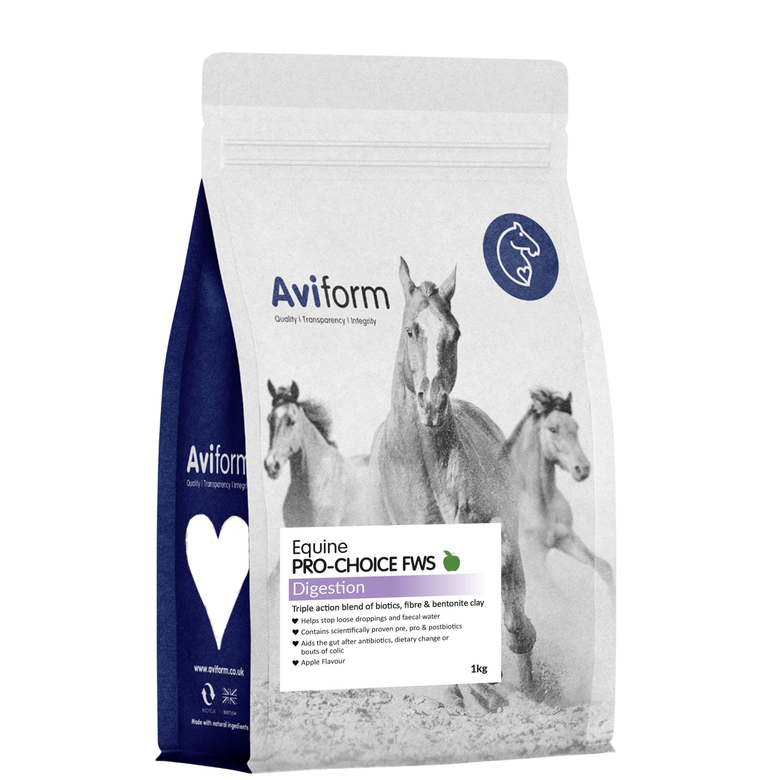
5. Pro-Choice FWS Works On The Hindgut, Not The Tail
Pro-Choice FWS is built specifically for this. It combines selected fibre sources, yeast products and gut-supporting ingredients with prebiotics, probiotics and postbiotics, plus a bentonite clay binder that helps absorb excess moisture in the gut.
The aim is a more stable hindgut environment and more consistent droppings, rather than managing the symptom at the tail end.
6. The Owners Who Break The Cycle Change Two Things At Once
Supplementing while still switching feeds abruptly tends to give you a partial result. Introducing new forage gradually, keeping the routine predictable, and bringing hay in while the horse is still grazing all reduce the disruption the gut has to absorb.
Do that alongside Pro-Choice FWS and you are settling the cause and the trigger together, which is what stops it coming back a fortnight later.
Settle The Gut And The Tail Looks After Itself, Free Delivery Over £35 👇
- Prebiotics, probiotics and postbiotics plus a bentonite clay binder
- Built for faecal water specifically, not general digestion
- Formulating in Norfolk since 1977
- Feefo Platinum Trusted Service Award 2026
Or browse the full equine digestion range
Trusted by UK owners since 1977
Aviform equine digestion products are natural nutritional supplements. They are not veterinary medicines. If your horse has diarrhoea, is losing weight or seems unwell, speak to your vet.